
THE SANSKRIT ĀSANA NAME CHEAT SHEET
A SIMPLE, PRINTABLE SANSKRIT STUDY GUIDE FOR YOGA TEACHERS AND STUDENTS, WHO WANT TO FEEL CONFIDENT, CLEAR, AND EMBODIED IN PRACTICE.
EVERYONE IS USING SANSKRIT IN YOGA
But few people are ever taught HOW TO UNDERSTAND IT.
Most yoga students and teachers are exposed to Sanskrit names early on, yet rarely given a clear framework to make sense of them.
You might recognise this:
😣 You know the shapes of the postures, but the SANSKRIT NAMES DON'T STICK
😣 You hesitate to use traditional names because you’re UNSURE OF PRONUNCIATION
😣 You rely on English cues, even though you’d like to HONOUR THE ROOTS the practice
😣 You’ve memorised a few pose names, but they feel DISCONNECTED and RANDOM
😣 You sense there’s deeper meaning in the names — but no one ever explained WHY.
And over time, that gap creates distance.
Distance from confidence when teaching.
Distance from clarity when studying.
But Sanskrit isn’t meant to be memorised as endless lists.
It’s a LOGICAL SYSTEM built from simple root words.
Once you understand those building blocks, the names stop feeling foreign.
They become a MAP.
MAKE THIS CHEAT SHEET YOURS TODAY
THIS CHEAT SHEET IS DESIGNED TO BRIDGE THE GAP
Between hearing Sanskrit… and understanding it.
Between avoiding traditional language… and using it with ease.
Between memorisation… and real comprehension.
Inside this Asana Name Cheat Sheet, you’ll learn how to:
✅ Understand Sanskrit as a LOGICAL SYSTEM, not random words
✅ Break down any asana name into CLEAR, meaningful parts
✅ Recognise common ROOT TERMS, DIRECTIONS, and ACTIONS
Rather than asking you to memorise long lists, this guide shows you HOW THE LANGUAGE WORKS — so your understanding keeps growing every time you step onto the mat.
IT'S A REFERENCE YOU CAN RETURN TO AGAIN AND AGAIN
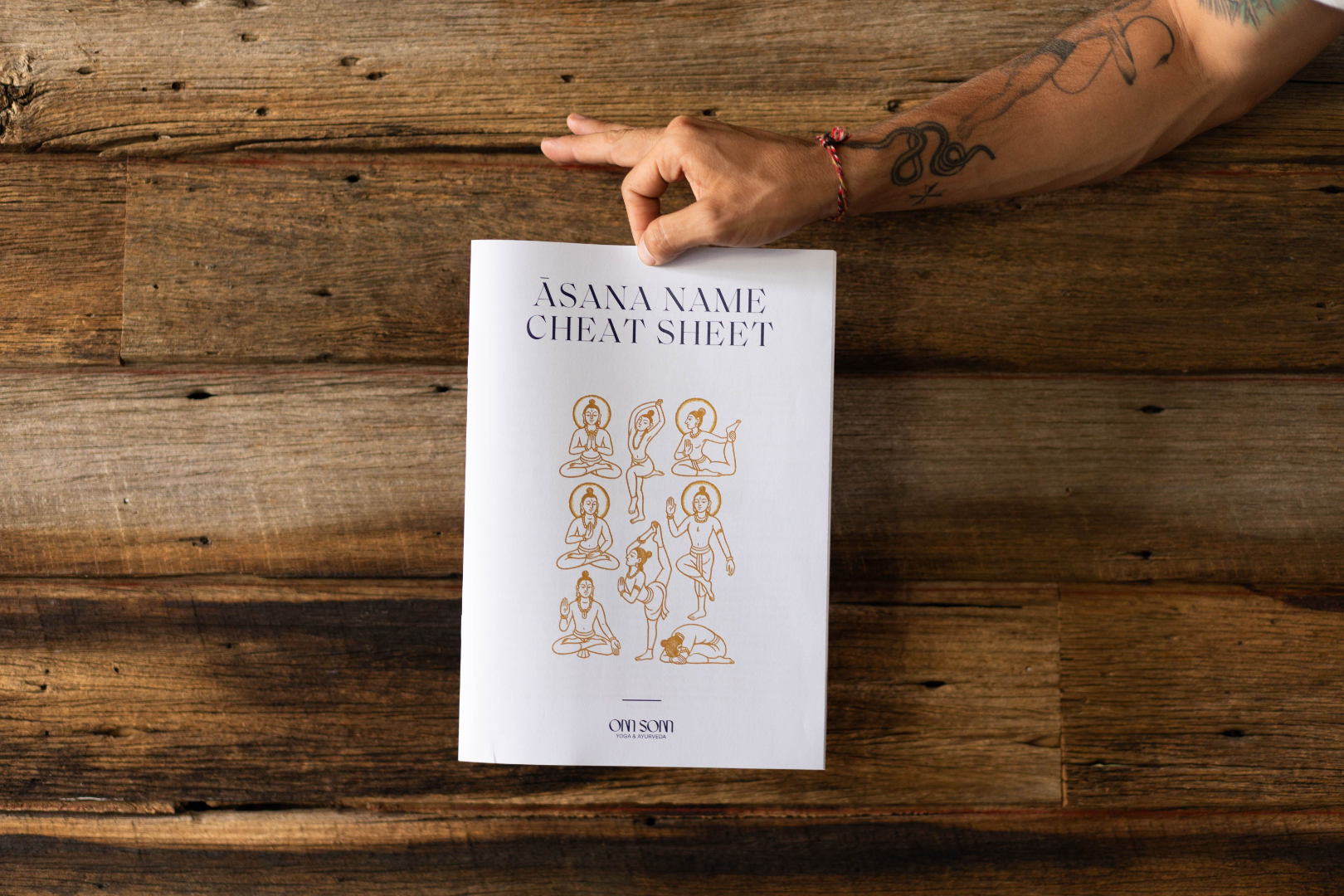
WHAT IF UNDERSTANDING ASANA NAMES WAS SIMPLE...
💫 What if you could BREAK DOWN ANY ASANA NAME into clear, logical parts
💫 What if you could PRONOUNCE AND USE SANSKRIT WITH CONFIDENCE
💫 What if the names stopped being abstract sounds and became a MAP OF THE BODY IN MOTION
THIS IS WHAT HAPPENS WHEN YOU HAVE A SYSTEM TO MAKE SENSE OF SANSKRIT

INTRODUCING
THE SANSKRIT ASANA NAME CHEAT SHEET
A SIMPLE, PRINTABLE SANSKRIT STUDY GUIDE FOR YOGA TEACHERS AND STUDENTS, WHO WANT TO FEEL CONFIDENT, CLEAR, AND EMBODIED IN PRACTICE.
INCLUDES:

22+ PAGE PRINTABLE PDF CHEAT SHEET
A beautifully designed, downloadable reference you can view on your phone, tablet, or computer, or print for study and teaching. Created to be clear, practical, and easy to return to, whether you’re learning, revising, or teaching from it.

COMMON SANSKRIT ROOT TERMS
Learn the building blocks behind asana names so they actually make sense. This section breaks down commonly used Sanskrit roots, helping you understand patterns in naming rather than memorising individual poses.

VISUAL REFERENCE PAGES FOR MEMORY & RECALL
Visual learning made simple. These pages support quick recognition and retention, helping you link Sanskrit names with their meaning and shape, perfect for study, teaching, or refreshing your knowledge before class.

AUDIO RECORDING OF ASANA NAMES (BY AARON)
Listen to clear, accurate pronunciation of asana names to build confidence and familiarity with spoken Sanskrit. Ideal for learning on the go or refining how you cue and teach with greater clarity and presence.
GET INSTANT ACCESS TO THIS SANSKRIT STUDY GUIDE FOR ONLY $7 AUD
MAKE IT YOURS RIGHT NOWLIMITED TIME OFFER: PRICES SUBJECT TO CHANGE
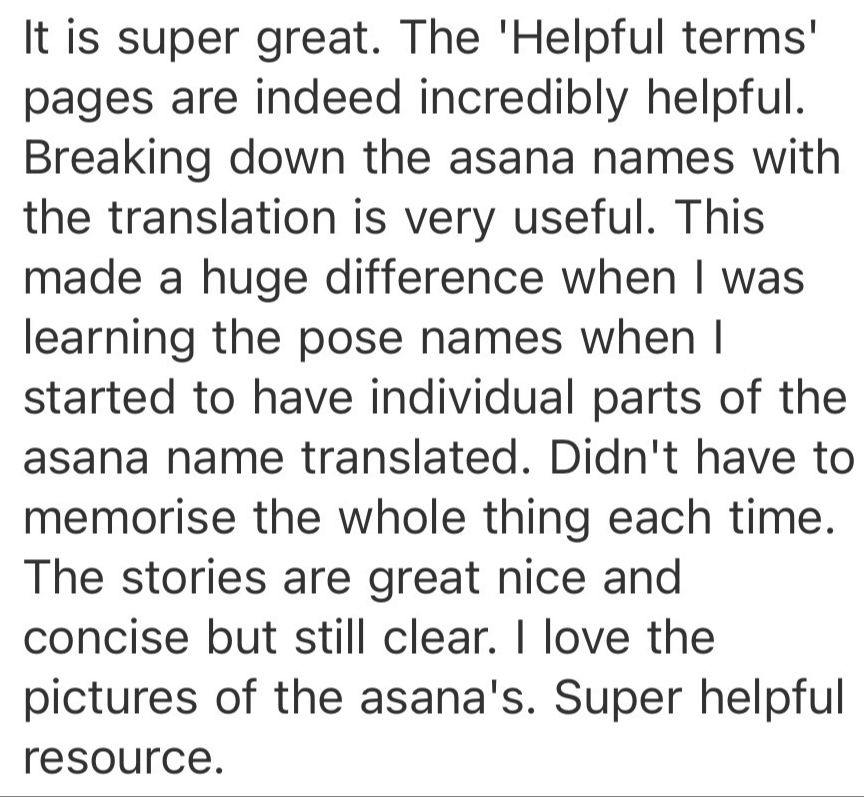
WHAT PRACTITIONERS & TEACHERS ARE SAYING:





PRACTICE WITH PURPOSE. LEARN THE MEANING BEHIND THE MOVEMENT.
DOWNLOAD THE ASANA NAME CHEAT SHEET TODAY — FOR ONLY $7 AUD
DOWNLOAD TODAYLIMITED TIME OFFER: PRICES SUBJECT TO CHANGE

A LAST NOTE FROM ME TO YOU
This cheat sheet was created as a simple companion for your practice and your teaching — something to walk alongside you, not something to rush through or memorise. It isn’t meant to be “completed,” but returned to slowly over time, as your understanding of yoga continues to deepen and evolve.
Sanskrit, like the practice itself, reveals its meaning through repetition and relationship. The more you hear the words, speak them, and feel them in your body, the more they begin to make sense beyond the intellect. This guide is here to support that process, offering clarity without pressure and structure without rigidity.
My hope is that this resource helps you feel more confident in your cueing, more connected to the meaning behind the shapes you practise and teach, and more at ease in your own voice as a teacher. If it supports you in any small way along that path, then it’s doing exactly what it was created for.
Hari Om,
Aaron